







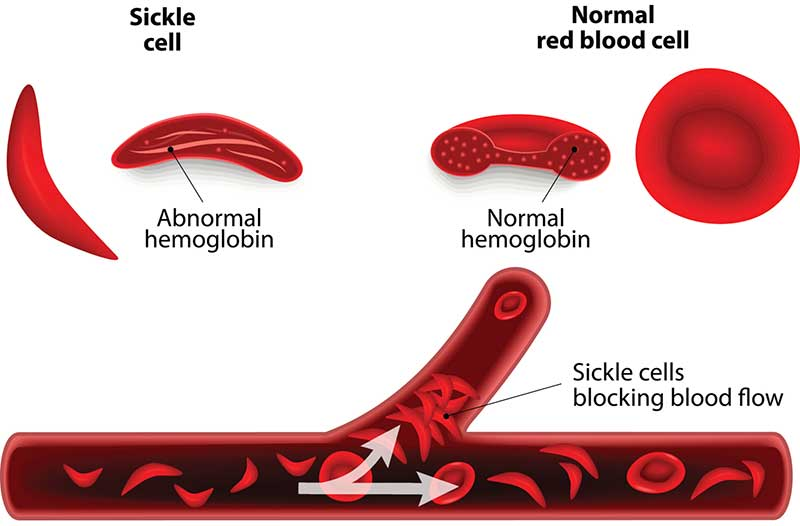
Sickle cell disease is an inherited blood disorder that disrupts the oxygen flow throughout the body. Normally, red blood cells are disc-shaped and flexible, allowing them to travel smoothly and deliver oxygen to all organs. However, in sickle cell disease, a genetic mutation causes these cells to become rigid and take on a crescent or “sickle” shape.
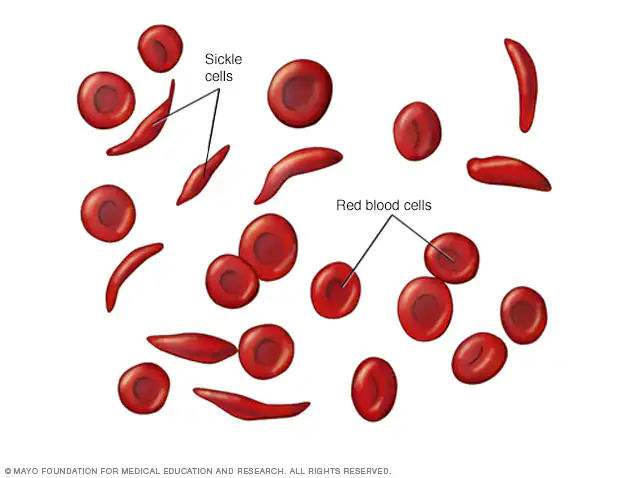
These sickle cells pose a significant problem for two reasons:
- Blocked Blood Flow: Their stiff shape prevents them from squeezing through narrow blood vessels. This blockage disrupts oxygen delivery and can lead to pain crises, the hallmark symptom of sickle cell disease.
- Shortened Lifespan: Sickle cells die prematurely, leading to anemia, a condition characterized by a lack of red blood cells. This deficiency further reduces the body’s ability to transport oxygen.
Causes and Inheritance
Sickle cell disease stems from a genetic mutation in the hemoglobin gene, the blueprint for the protein in red blood cells responsible for carrying oxygen. Inheriting two copies of this mutated gene, one from each parent, results in sickle cell disease. Inheriting only one copy leads to a condition called sickle cell trait, which typically doesn’t cause any symptoms.
Complications and Management
The blocked blood flow caused by sickle cells can trigger a variety of complications, including:
- Severe pain episodes in various parts of the body
- Increased risk of infections
- Organ damage, such as stroke or lung problems
- Delayed growth and development in children
While there’s no cure for sickle cell disease, treatment focuses on managing symptoms and preventing complications. This can involve:
- Pain medication: To manage the excruciating pain during crises.
- Hydration: Staying well-hydrated helps prevent sickle cells from clumping.
- Hydroxyurea: A medication that can increase the production of normal red blood cells.
- Blood transfusions: In severe cases, blood transfusions can replace diseased red blood cells with healthy ones.
- Bone marrow transplants: In rare cases, bone marrow transplants can offer a potential cure.
Researchers are actively exploring new treatment options for sickle cell disease, including gene therapy approaches that aim to correct the underlying genetic mutation.
Despite the challenges, with proper treatment and a healthy lifestyle, people with sickle cell disease can lead fulfilling lives. If you or someone you know has sickle cell disease, it’s crucial to work closely with a healthcare professional to manage the condition and maintain good health.