







The Sabi Sand region of Kruger National Park in South Africa once echoed with the roars of the Mapogo lion coalition. This infamous group of males, known for their ruthlessness and power, carved their reign into history between 2006 and 2012.
The Mapogo, named after a notorious security company by researchers, originated from a mega-pride known as the Eyrefield Pride (or Sparta Pride). This wasn’t unusual for the Sabi Sand, where large male coalitions were becoming increasingly common. The Mapogo themselves were a fascinating mix: five related brothers sired by another powerful mega-pride coalition, with the eldest male, Makulu, believed to be their half-brother.
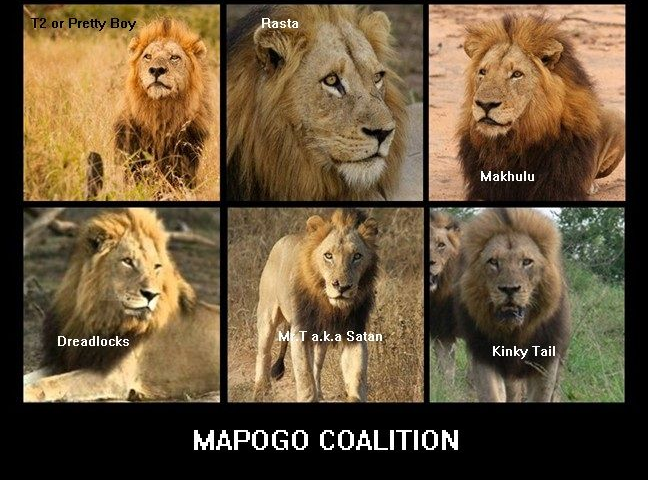
Their ambition for dominance was undeniable. Through brutal takeovers, the Mapogo established control over a vast territory spanning a staggering 70,000 hectares. Their reign was marked by violence – estimates suggest they killed over 110 lions, including cubs and rival males, to solidify their hold.
The Mapogo’s story has captivated wildlife enthusiasts. Their ruthlessness is documented in the acclaimed documentary “Brothers in Blood: The Lions of Sabi Sand,” which offers a glimpse into their power struggles and hunting prowess. However, their reign wasn’t destined to last.
As with all lion prides, age and new challengers took their toll. The Mapogo brothers, weakened and separated, were eventually ousted from their territory. One by one, they succumbed to the harsh realities of lion life – hunger, disease, and battles with younger males.
The Mapogo’s legacy is a complex one. They were symbols of raw power and the ever-shifting dynamics of lion society. Their story serves as a reminder of the constant struggle for survival in the wild, where dominance can be fleeting and victory often comes at a brutal cost.