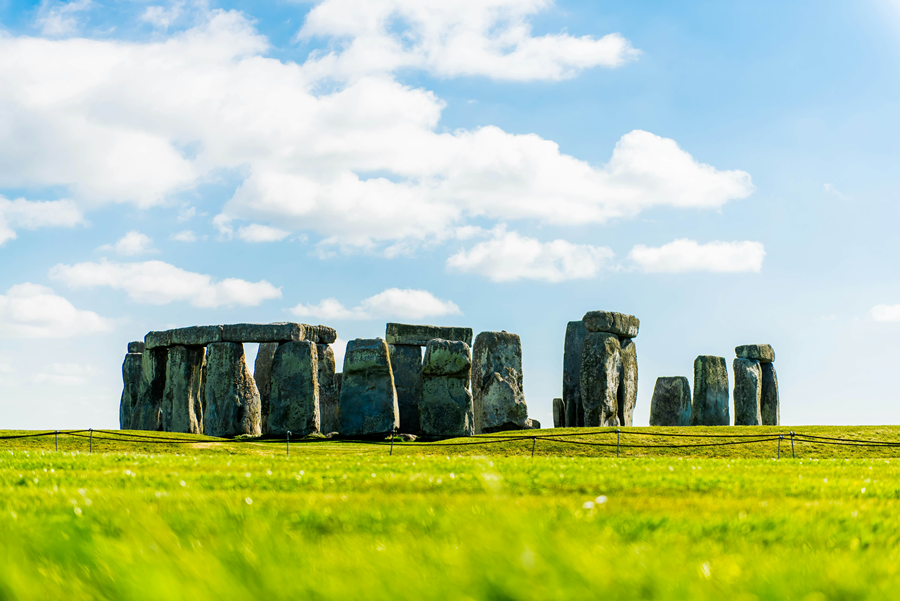







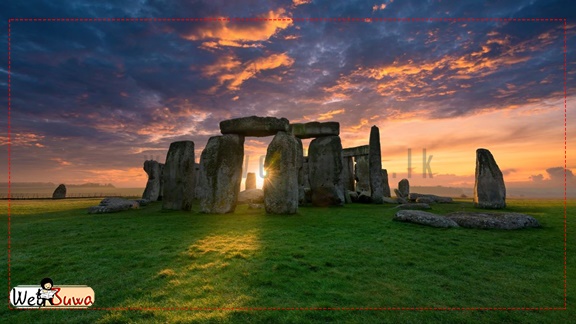
Towering over the Salisbury Plain in Wiltshire, England, Stonehenge is a prehistoric monument that has captivated and mystified humanity for millennia. Its origins shrouded in secrecy, the purpose of this giant circle of stones continues to be a topic of debate among archaeologists and historians.
Construction of Stonehenge wasn’t a one-time event. Evidence suggests it was built in stages, spanning a period from around 3000 to 1520 BCE. The earliest monument was a simple henge, a circular enclosure with a ditch and bank. Later, the iconic bluestones, some weighing several tons, were transported an astonishing distance of 140 miles from Wales. Finally, the massive sarsen stones, locally sourced sandstone blocks, were erected in a horseshoe formation and topped with horizontal lintels, creating the awe-inspiring structure we see today.
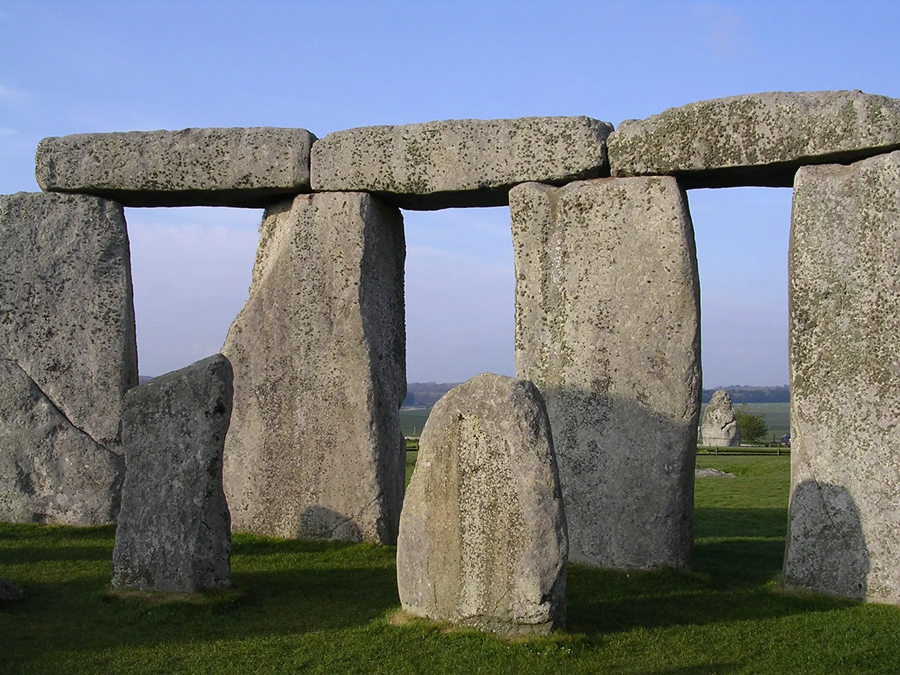
Theories abound regarding Stonehenge’s function. Some believe it served as a religious temple, a place for worshipping the sun or other celestial bodies. The alignment of the stones with the summer solstice sunrise lends credence to this idea. Others propose it was a burial ground or a center for astronomical observation. The presence of nearby burial mounds and the stones’ possible alignment with lunar cycles fuel these speculations.
Despite extensive research, the true purpose of Stonehenge remains elusive. However, its enduring legacy is undeniable. It stands as a testament to the ingenuity and engineering prowess of a bygone era. Designated a UNESCO World Heritage Site in 1986, Stonehenge continues to draw visitors from around the world, each generation marveling at this enigmatic monument and pondering the secrets it holds.