





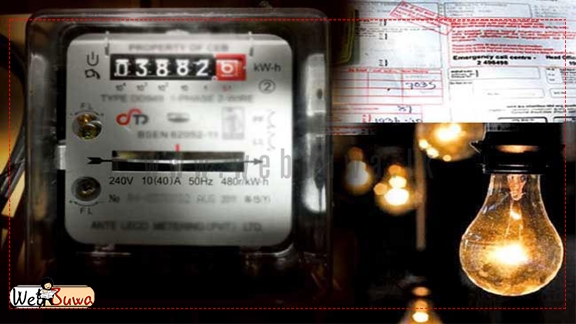
The Ceylon Electricity Board (CEB) reported a substantial financial loss of Rs. 38.7 billion in 2025, even after implementing several electricity tariff revisions throughout the year, according to the Central Bank’s Annual Economic Review 2025.
The report highlights that although electricity tariffs were reduced multiple times in 2024 and further lowered by an average of 20% in January 2025, the CEB’s financial position deteriorated due to rising generation costs. This increase was mainly attributed to a higher reliance on thermal power generation during the first quarter, driven by dry weather conditions.
To mitigate mounting losses, tariffs were increased by 15% in June 2025. However, this adjustment proved insufficient to offset costs, leading to the year-end loss.
Consequently, the CEB’s short-term liabilities and borrowings rose from Rs. 174.3 billion at the end of 2024 to Rs. 206.2 billion by the end of 2025. Long-term liabilities also edged up from Rs. 409 billion to Rs. 411.2 billion over the same period.
The Central Bank further noted that another tariff revision is already planned, with electricity prices expected to increase by 10.3% from April 2026, based on projected costs and revenue needs for the second quarter.
Meanwhile, electricity demand continued to grow alongside overall economic activity in 2025, with total sales increasing by 5.8% year-on-year across all sectors. Household consumption, the largest segment, recorded notable growth from the second quarter onward.
However, disruptions caused by Cyclone Ditwah led to a temporary dip in demand across several sectors toward the end of the year. Despite this setback, overall electricity consumption remained higher compared to the previous year.