






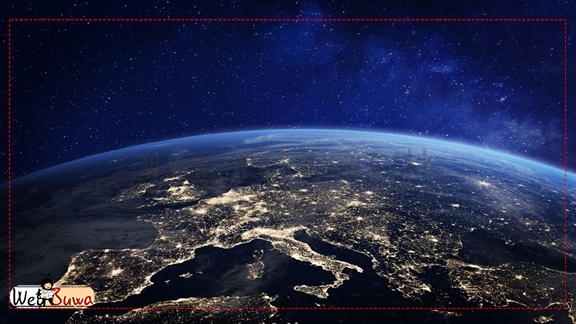
The Earth’s rotation is decelerating due to global warming-induced polar ice melt, potentially leading to adjustments in our clocks by subtracting a second, as detailed in a recent Nature study.
This phenomenon, termed a “negative leap second,” may necessitate earlier revisions to Coordinated Universal Time (UTC), impacting computer network timing systems.
Duncan Agnew, a geophysicist from the Scripps Institution of Oceanography at the University of California San Diego and the study’s author, explained that melting polar ice redistributes the Earth’s mass, altering its angular velocity.
This shift in mass, particularly as water migrates towards the equator from regions like Antarctica and Greenland, influences the planet’s rotation speed.
Thomas Herring, a geophysics professor at the Massachusetts Institute of Technology (MIT), highlighted the significant impact of this phenomenon, emphasizing the unprecedented nature of human-induced alterations to Earth’s rotation.
The study underscores that while Earth’s rotation naturally slows over millions of years, contemporary changes are occurring at an accelerated pace due to anthropogenic factors like global warming.