



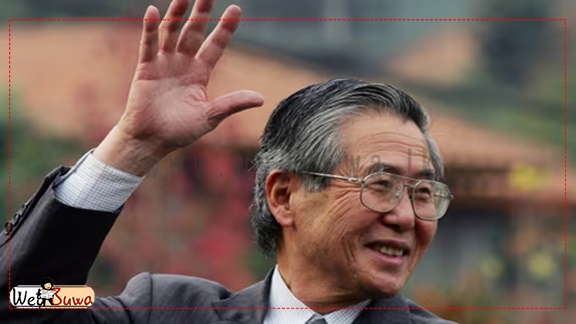
Former Peruvian president Alberto Fujimori, who oversaw economic growth in the 1990s but was later imprisoned for human rights abuses related to his brutal crackdown on Maoist rebels, passed away on Wednesday at the age of 86.
Earlier in the day, his close associates visited him and reported that his condition was critical.
“After a long battle with cancer, our father… has just departed to meet the Lord,” his daughter Keiko Fujimori shared in a post on X, co-signed by the former leader’s other children.
Fujimori, the son of Japanese immigrants, was a relatively unknown chancellor of an agricultural university when he was elected president in 1990. He quickly gained a reputation as a shrewd politician with a hands-on approach, delivering results despite drawing criticism for consolidating power.
He ended the crippling hyperinflation that had left millions of Peruvians unemployed, privatized numerous state-run enterprises, and reduced trade tariffs, laying the groundwork for Peru to become, for a time, one of Latin America’s most stable economies.
During his presidency, the notorious leader of the Maoist insurgent group Shining Path, Abimael Guzman, was captured—a major victory against a movement that in the 1980s had nearly toppled the Peruvian government. Guzman died in prison in September 2021.
However, many Peruvians saw Fujimori as an autocratic figure after he used military tanks to dissolve Congress in 1992, redrafted the constitution to push through free-market reforms and tough anti-terrorism measures.
A series of corruption scandals further damaged his reputation during his decade in office.
Shortly after winning a controversial third term in 2000—having changed the constitution to allow his candidacy—videos surfaced of his chief adviser and intelligence head Vladimiro Montesinos bribing politicians with cash. Fujimori fled to Japan, where he sought refuge.
From Tokyo, he resigned the presidency via fax and unsuccessfully attempted to run for a seat in the Japanese senate.
Montesinos was eventually apprehended in Venezuela and jailed after incriminating himself in hundreds of videos, showing bribes paid to politicians, business leaders, and media executives.
Legal cases against Fujimori mounted, including allegations that he had authorized death squads in his fight against Shining Path rebels.
Despite his safety in Japan as a dual citizen—Japan does not extradite its nationals—Fujimori shocked many by returning to Chile in 2005, seemingly hoping for reconciliation and a return to politics.
Instead, he was arrested during a layover in Chile, extradited to Peru in 2007, and sentenced in 2009 to 25 years in prison.