


The Hamas-run health ministry in Gaza reports that an Israeli raid on a refugee camp, which resulted in the rescue of four hostages, killed 274 people, including children and other civilians.
On Saturday, Israeli forces, supported by air strikes, engaged in intense gun battles with Hamas in and around the Nuseirat refugee camp, leading to the release of Noa Argamani, 26, Almog Meir Jan, 22, Andrei Kozlov, 27, and Shlomi Ziv, 41, who were abducted from the Nova music festival on October 7 and have now returned to Israel.
The Israeli military estimates that fewer than 100 people died during the operation. However, if confirmed, the figures from the Hamas-run health ministry in Gaza would make it one of the deadliest days of the conflict so far.
Residents of the densely populated area have described the terror of intense bombardment and heavy gunfire. Abdel Salam Darwish told the BBC he was in a market buying vegetables when he heard fighter jets and gunfire, later witnessing bodies scattered in the streets and blood on the walls.
The release of the hostages has sparked celebration in Israel and has been welcomed by world leaders, including US President Joe Biden. However, there is growing criticism of the operation’s deadly toll, with EU foreign affairs chief Josep Borrell condemning it “in the strongest terms.” An Israeli minister criticized the EU for condemning Israel instead of Hamas, which he accused of hiding behind civilians.
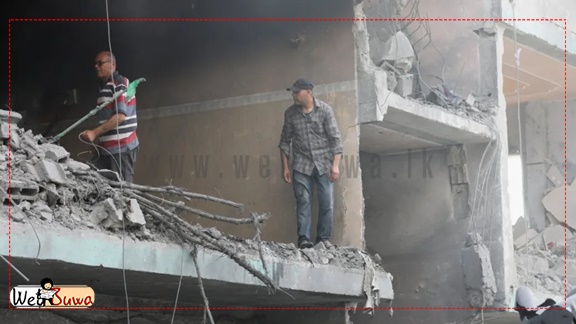
Images from the Nuseirat refugee camp show intense bombardment and people mourning the dead. Two hospitals in Gaza, al-Aqsa and al-Awda, reported counting 70 bodies between them. The Hamas-run health ministry released the names of 86 out of the 274 Palestinians it claims were killed during the two-hour operation.
Israel’s military spokesman Daniel Hagari had earlier estimated fewer than 100 casualties in the “high-risk, complex mission” based on “precise intelligence.” Defence Minister Yoav Gallant stated that special forces operated “under heavy fire” during the rescue, with one officer later dying from injuries sustained.
Footage from al-Aqsa hospital shows many severely injured people, leaving little room for doctors to move. Other videos show a continuous stream of new cases being brought in by car and ambulance. Dr. Marwan Abu Nasser, director of al-Awda Hospital, described the increasing number of dead and the hospital’s lack of a morgue to accommodate the bodies.
(with input from agencies)