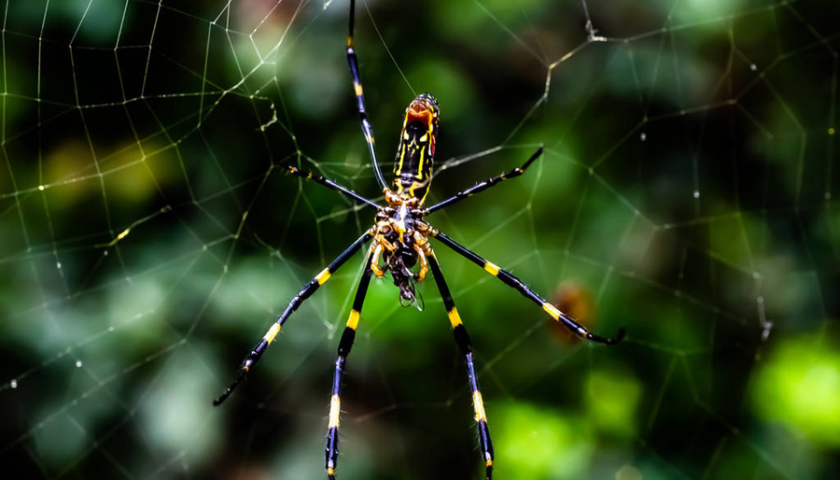







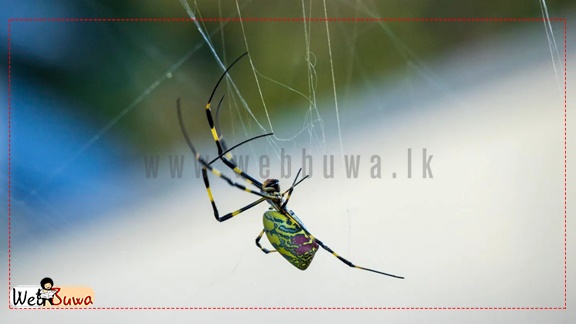
Concerns over venomous, palm-sized spiders potentially arriving in New York and other East Coast cities have captured the attention of arachnophobes recently. These spiders could appear this summer, though they have yet to be seen in urban Northeastern areas after entering the U.S. around ten years ago.
The Joro spider, known for its yellow and gray coloring, four-inch-long legs, and venom harmful only to other insects, is spreading more rapidly northward than southward, according to a November study from Clemson University.
The arachnid could show up in New York and neighboring states as early as this summer, as reported by The New York Times in December. University of Georgia researcher Andy Davis stated it’s a matter of “when, not if.”
Most sightings have occurred in Georgia, followed by South Carolina and Tennessee, with recent reports in Maryland, just north of Washington, D.C., according to a University of Georgia tracker.
Though the spider poses no danger to humans, it is an invasive species in the U.S., preying on bees, butterflies, wasps, grasshoppers, cockroaches, beetles, and other spiders. The Joro is also noted for being one of the “shyest” spiders documented, responding to harmless disturbances by freezing for over an hour, an “unprecedented” behavior for a spider, according to a 2023 University of Georgia study.
Once in urban environments like New York City, the Joro spider likely won’t have issues adapting, as researchers at the University of Georgia have found it has some tolerance to noise and stress, building webs on telephone poles, street lamps, and traffic signals next to busy roads. A significant factor in the spider’s spread is its ability to fly by releasing silk that catches wind currents, allowing for non-precise, wind-guided flight.
The spider’s bite is comparable to a bee sting, Davis told The Times, adding that despite handling about 500 of these spiders, they do not bite humans unless provoked.
Despite articles predicting the Joro spider’s arrival in New Jersey and New York, it’s still unclear when a significant number will reach these states. Researchers have predicted a summer arrival, but New Jersey Pest Control suggested in a January blog post that the spider may arrive “later this year.”
Originating from Asia, the Joro spider is believed to have arrived in the U.S. around 2013 via a container ship from Japan, China, Taiwan, or Korea bound for Atlanta. In the southeastern U.S., peak sightings occur between August and October, mostly along forest edges and trailsides
The Joro spider is among several invasive species making headlines in the U.S. Spotted lanternflies from Southeast Asia, which Joro spiders eat, have increased since arriving around 2014, leading officials to urge Americans to stomp on them to protect crops. Recently, cicadas, though not invasive, have also emerged across the U.S., causing noise complaints and bringing a mix of environmental impacts