






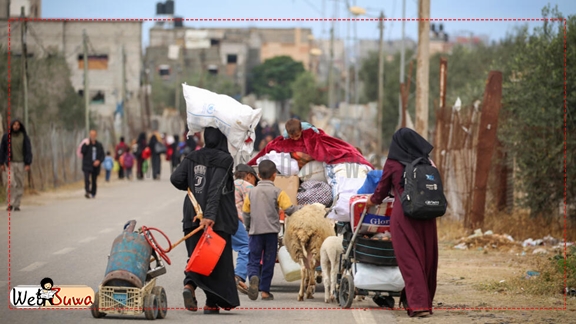
The Israeli military has issued orders for approximately 100,000 Palestinians residing in the southern city of Rafah in Gaza to evacuate. This move suggests that a ground invasion in the area could be imminent, adding complexity to ongoing efforts to negotiate a cease-fire.
Despite objections from Israel’s key allies, including the United States, regarding an attack on Rafah, the military operation looms, raising concerns globally for the safety of the roughly 1.4 million Palestinians living there.
Humanitarian organizations have cautioned that an offensive in Gaza will exacerbate the already dire humanitarian situation and result in further civilian casualties in a conflict that has claimed thousands of lives and devastated the region over the past seven months.
In a phone call on Monday, U.S. President Joe Biden reiterated to Israeli Prime Minister Benjamin Netanyahu the importance of pursuing a cease-fire with Hamas to safeguard the lives of Israeli hostages held in Gaza. Meanwhile, Hamas and mediator Qatar have expressed concerns that a potential invasion of Rafah could derail ongoing mediation efforts for a cease-fire.
Earlier discussions between Hamas and the U.S. had explored a proposal for ending the conflict and withdrawing Israeli troops in exchange for the release of all hostages held by Hamas. However, Israeli officials have rejected this proposal, vowing to continue their campaign until Hamas is dismantled.
Netanyahu emphasized the strategic significance of seizing Rafah, which Israel views as the last major Hamas stronghold in Gaza, to prevent the militants from rebuilding their military capabilities and launching further attacks on Israel.
According to Lt. Col. Nadav Shoshani, an army spokesperson, the evacuation orders entail relocating approximately 100,000 individuals from parts of Rafah to a designated humanitarian zone called Muwasi, situated nearby along the coast. This zone, declared by Israel, is intended to provide essential provisions such as tents, food, water, and field hospitals. However, it remains unclear if the necessary infrastructure is already in place to accommodate the influx of evacuees.