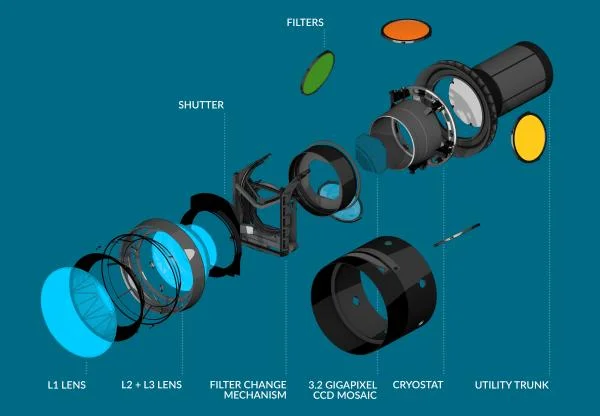







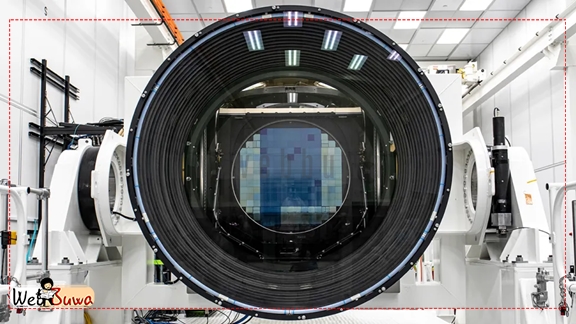
Scientists have achieved a monumental feat with the creation of an incredibly vast digital camera, marking the largest ever constructed on Earth. With an astonishing resolution of 3.2 billion pixels, this camera underwent a meticulous nine-year development process.
Named the LSST Camera, it stands as a pioneering achievement in astronomical instrumentation and will serve as the centerpiece of the Vera Rubin Observatory, embarking on an exploration of the southern skies.
This groundbreaking camera is poised to amass a staggering 60 petabytes of data, delving into an array of cosmic phenomena including the composition and expansion of the universe, the dynamics of the solar system, the formation of our galaxy, and the elusive realms of dark energy and dark matter.
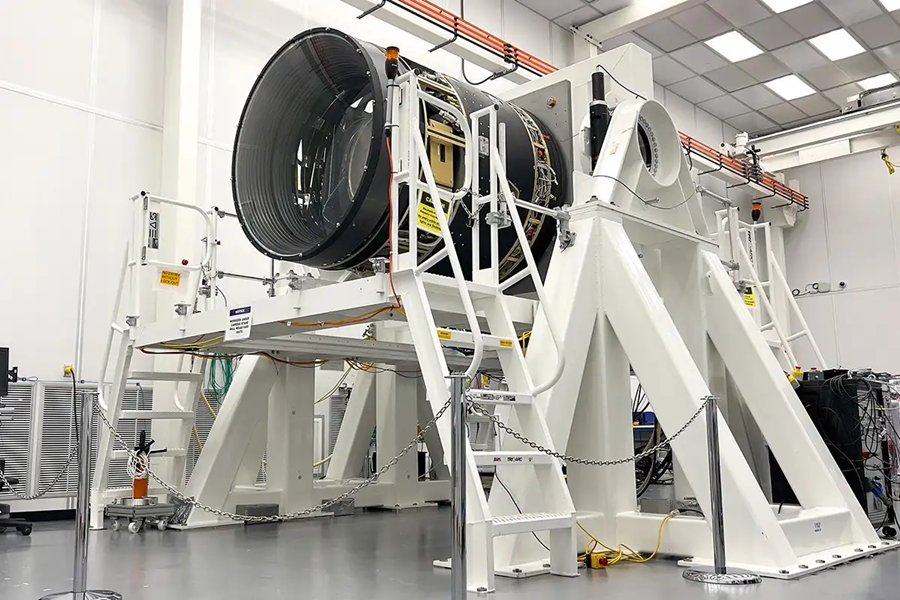
Equipped with a 5.1-foot-wide optical lens, the LSST Camera will capture 15-second exposures of the sky at 20-second intervals, utilizing automatic filter changes to observe light across a spectrum ranging from near-ultraviolet to near-infrared.
Furthermore, the camera will document transient events, enabling other scientists to train their telescopes and monitor changes in the southern sky.
Zeljko Ivezic, an astrophysicist from the University of Washington and director of the Rubin Observatory’s construction, expressed excitement about the prospect, stating, “We will soon commence the production of the greatest movie of all time and assemble the most informative map of the night sky ever created.”
Regarding the cost, the camera’s price exceeds that of an actual Rolls Royce by a millionfold. Weighing in at 6,200 pounds (2,812 kilograms), it surpasses the weight of the luxury car.
Additionally, one could afford a Maserati by selling just one of the 21 rafts attached to the camera’s focal plane.
Aaron Roodman, a physicist from SLAC and the lead of the camera program, shared his enthusiasm for studying the expansion of the universe, particularly through gravitational lensing to better comprehend dark energy. He emphasized the meticulous measurements of billions of galaxies’ brightness and shape across multiple filters, as well as the discovery and examination of unique celestial phenomena where distant quasars align with nearby galaxies.